Teaching
Teaching and supervision
Undergraduate and graduate courses taught, and completed graduate thesis supervision. Click a course title to open its syllabus.
Undergraduate
- EBB453School Counseling Practice I
- EBB454School Counseling Practice II
- EFS100Community Service Practice
- EFS152Addiction and Combating Addiction
- KP111Career Planning
- RPD156Guidance and Psychological Counseling in Schools
- RPD358Career Guidance Practice
- RPD363Career Guidance
- RPD373Addiction and Intervention Approaches in Counseling
- RPD451Programme Development in Guidance
- RPD455Individual Counseling Practice I
- RPD458Guidance and Psychological Counseling Seminar
Graduate
Completed thesis supervision
- 2025
Longitudinal change in school engagement, internet addiction and phubbing among adolescents entering high school
- 2023
The mediating role of social and emotional learning in the effect of school culture on school engagement in adolescents
- 2020
The role of family resilience and coherence in the relationship between spiritual well-being and family satisfaction
- 2016
Validity and reliability of a preschool anxiety scale rearranged for children aged 4-6
- 2016
Validity and reliability of a preschool anxiety scale rearranged for children aged 4-6
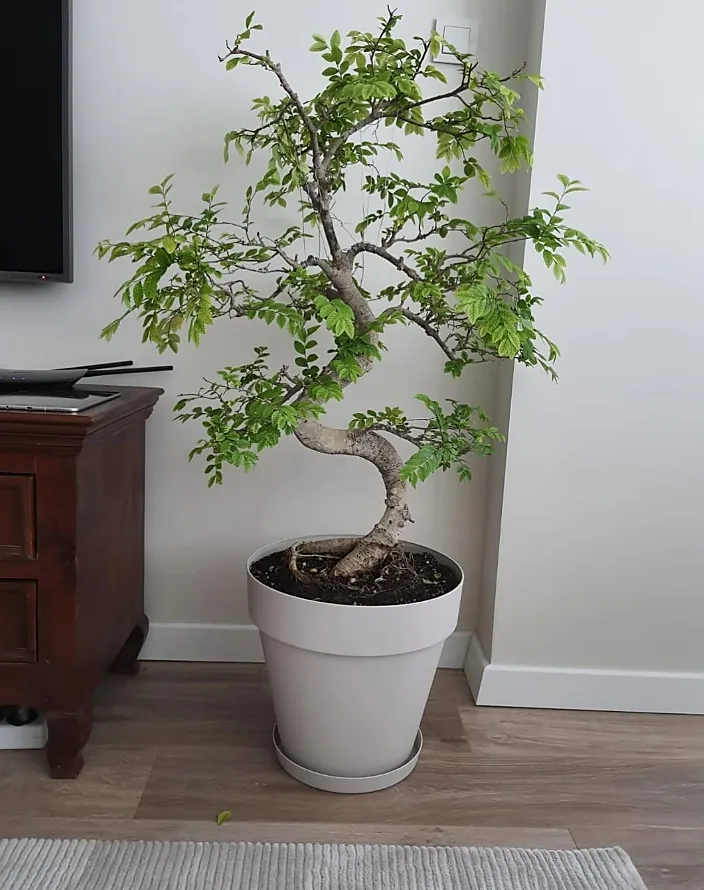
Shaped with patience
Bonsai is a slow craft built on watching closely how a tree takes shape over the years. This tree is in the moyogi, or “informal upright”, style: the trunk rises from base to apex in irregular yet balanced curves, while the apex stays roughly above the roots. The aim is to recreate, on a small scale, the form that wind and time give a tree in nature.
The species is the Chinese elm (Ulmus parvifolia), native to China, Korea and Japan. Its leaves are small, glossy dark green and finely toothed, turning yellow, sometimes purple and red, in autumn. Depending on the climate it drops its leaves in winter or keeps some of them. As it ages the bark flakes off in patches, revealing lighter bark beneath, which is why it is also called the lacebark elm. Its flowers are small and inconspicuous and, unlike most elms, open in late summer. It tolerates a wide range of cold and heat and responds well to pruning, which makes it one of the most widely used bonsai species.
This tree has been with me since 2012. The photograph was taken in May 2022, with the spring growth fully out. I do not know its exact age; S-trunk elms like this are usually sold at five to ten years old. Given the thickness of the trunk, I estimate it is now around 20 to 25 years old.